
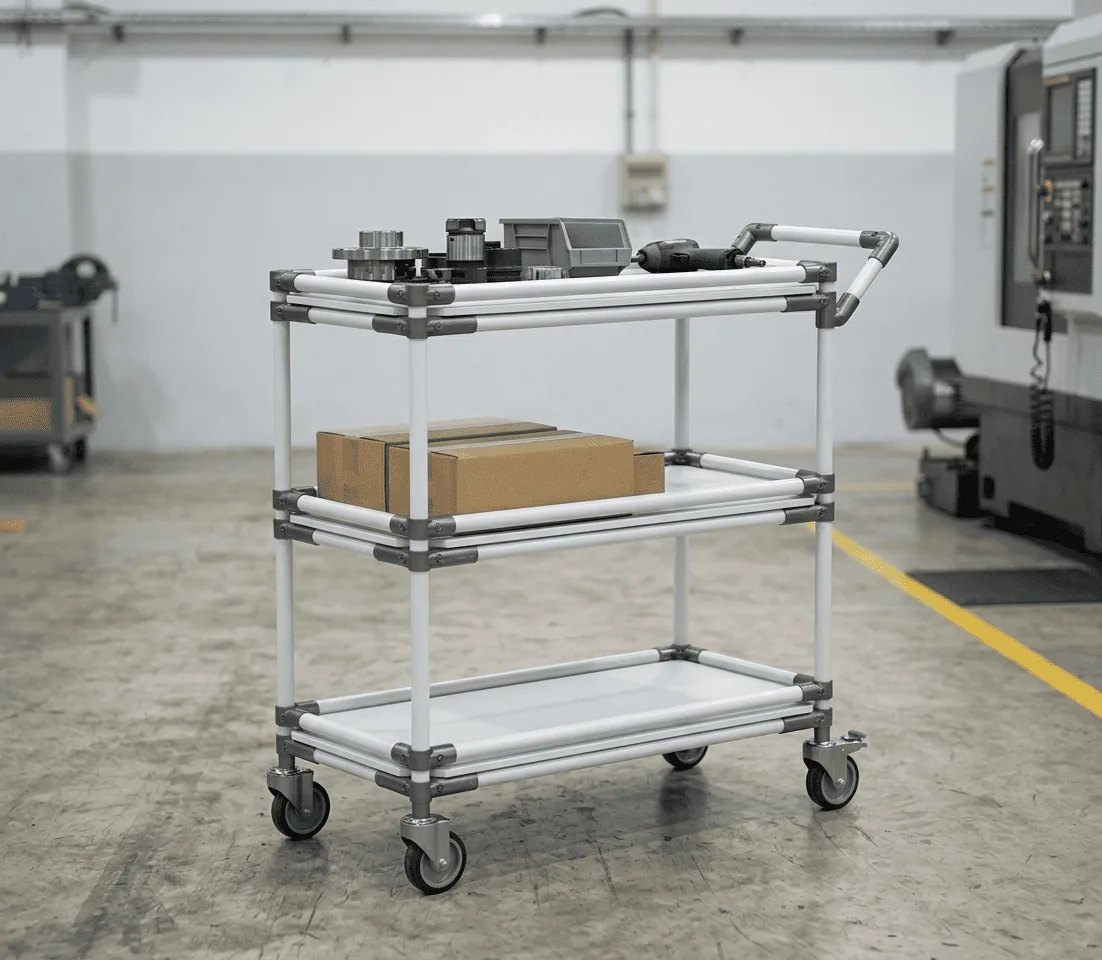
Top 6 Benefits of Using a Table Trolley in Malaysia’s Manufacturing Industry
In Malaysia’s manufacturing sector, efficiency, safety, and smooth workflow are critical to staying competitive. One simple yet powerful tool that can make a significant difference is table trolley in Malaysia. Whether in assembly lines, warehouses, or packaging stations, table trolleys make material handling easier, faster, and safer.
Here are the top 6 benefits of incorporating table trolleys into your manufacturing operations.
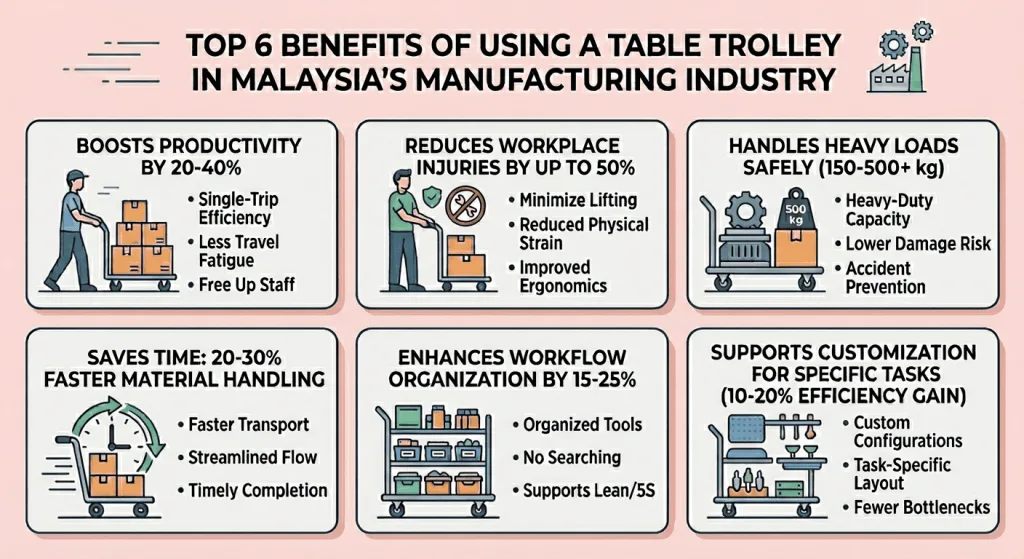
1. Boosts Productivity by 20–40%
Table trolleys allow workers to transport multiple items at once, eliminating the need for repeated trips across the factory floor.
Benefits at a glance:
- Moves several items in a single trip, saving time and effort
- Reduces repetitive strain and fatigue, allowing staff to work more efficiently
- Frees employees to focus on high-value tasks instead of manual transport
- Can save up to 50 hours of labor per month for a team of 10 workers
Example: On a production line, workers using trolleys can complete material transfers in half the usual time, which can increase daily output without hiring additional staff.
2. Reduces Workplace Injuries by Up to 50%
Manual lifting and carrying heavy loads are leading causes of workplace injuries in manufacturing, particularly back and shoulder strains. Table trolleys in Malaysia minimize physical strain and improve safety.
Key advantages:
- Reduces pressure on the back, shoulders, and knees
- Lowers the number of workplace injuries, reducing downtime
- Encourages proper ergonomics and safe handling practices
- Cuts workers’ compensation and medical costs
Example: Factories that adopt trolleys often see fewer injury-related absences, which keeps production schedules on track and reduces operational disruption.
3. Handles Heavy Loads Safely (150–500+ kg)
Industrial table trolleys are built to carry heavy loads without compromising safety or efficiency.
Highlights:
- Can support loads between 150–500+ kg depending on the model
- Reduces the risk of product damage by 15–25% during movement
- Prevents accidents caused by dropping or mishandling materials
- Suitable for raw materials, finished goods, or heavy machinery parts
Example: A warehouse moving large boxes of components can do it safely without risking employee injuries or product damage, ensuring quality control is maintained.
4. Saves Time: 20–30% Faster Material Handling
Efficiency is key in manufacturing, and time spent moving materials can add up significantly. Table trolleys help streamline this process.
Benefits include:
- Reduces travel time for transporting materials across the factory floor
- Speeds up tasks by 20–30% compared to manual handling
- Improves overall production output without extra labor costs
- Frees workers to focus on assembly, quality checks, or other tasks
Example: Transporting 200 small parts manually might take three hours, but with a trolley, the same task can often be completed in 2–2.5 hours.
5. Enhances Workflow Organization by 15–25%
A well-organized workflow reduces errors and ensures smoother operations. Table trolleys help maintain an orderly workspace and improve accessibility.
Key points:
- Keeps materials, tools, and products easily accessible
- Reduces wasted time searching for items or moving them around multiple times
- Supports lean manufacturing principles and 5S workplace organization
- Can increase operational efficiency by 15–25%
Example: Employees on an assembly line can have all required components on a single trolley, reducing movement and increasing focus on production quality.
6. Supports Customization for Specific Tasks (10–20% Efficiency Gain)
Many table trolleys are customizable to fit different industrial workflows, making them adaptable to unique manufacturing needs.
Advantages:
- Adjustable shelves and modular trays can be tailored to the size of the materials being moved
- Ergonomic handles enhance safety and comfort during use
- Reduces workflow bottlenecks by 10–20%, especially for specialized tasks
- Ideal for assembly, packaging, or inspection lines that require specific layouts
Example: A factory producing delicate electronic components can use a customized trolley with padded shelves and secure trays to prevent damage during movement.
Why Table Trolleys Are Vital for Malaysian Manufacturing
Why Table Trolleys Are Essential
- Suitable across industries: Automotive, electronics, F&B, chemical, and more
- Seamless integration: Works well with lean manufacturing and 5S practices
- Efficiency boost: Helps factories meet growing production demands
Types of Table Trolleys Available
- Stainless steel trolleys: Durable, corrosion-resistant, ideal for F&B and chemical industries
- Mild steel trolleys: Strong and cost-effective, perfect for warehouses and general factories
- Custom trolleys: Adjustable dimensions, modular trays, or ergonomic designs tailored to specific workflows
Maintenance Tips for Longevity
- Check wheels and bearings regularly to ensure smooth movement
- Clean shelves and frames to prevent rust, especially in humid environments
- Avoid exceeding the trolley’s weight capacity
- Lubricate moving parts periodically to maintain functionality
ROI: How Table Trolleys Save Money
- Reduced labor costs due to improved workflow efficiency
- Fewer workplace injuries = lower compensation and downtime costs
- Minimized product damage during transport
- Faster workflow contributes to higher production output
Table Trolley vs Manual Handling: Quick Comparison
| Factor | Table Trolley | Manual Handling |
|---|---|---|
| Efficiency | 20–40% higher | Lower |
| Safety | Reduced injuries | Higher risk |
| Load Capacity | 150–500+ kg | Limited |
| Speed | Faster | Slower |
| Cost (Long-Term) | Lower | Higher |
Conclusion
In Malaysia’s manufacturing industry, efficiency and safety are key to staying competitive. A table trolley in Malaysia may be simple, but it significantly improves workflow by reducing manual handling, saving time, and lowering the risk of workplace injuries. This leads to smoother operations and more consistent productivity.
In the long run, table trolleys also help reduce costs by minimizing product damage and improving efficiency. With customizable options available, they can fit different industrial needs, making them a practical and valuable investment for businesses aiming for sustainable growth.
Frequently Asked Questions (FAQs)
What is a table trolley used for in manufacturing?
A table trolley is used to transport materials, tools, and products efficiently within a factory or warehouse. It helps reduce manual handling, improves workflow, and increases productivity.
How much weight can a table trolley carry?
Most industrial table trolleys can carry between 150 kg to 500+ kg, depending on the design and materials used.
What industries in Malaysia use table trolleys?
Table trolleys are widely used in industries such as automotive, electronics, food and beverage (F&B), chemical processing, and general manufacturing.
Are table trolleys customizable?
Yes, many table trolleys can be customized with features like adjustable shelves, modular trays, and ergonomic handles to suit specific operational needs.
How do table trolleys improve workplace safety?
Table trolleys reduce the need for manual lifting, which helps prevent injuries such as back strain and muscle fatigue, creating a safer working environment for employees.