
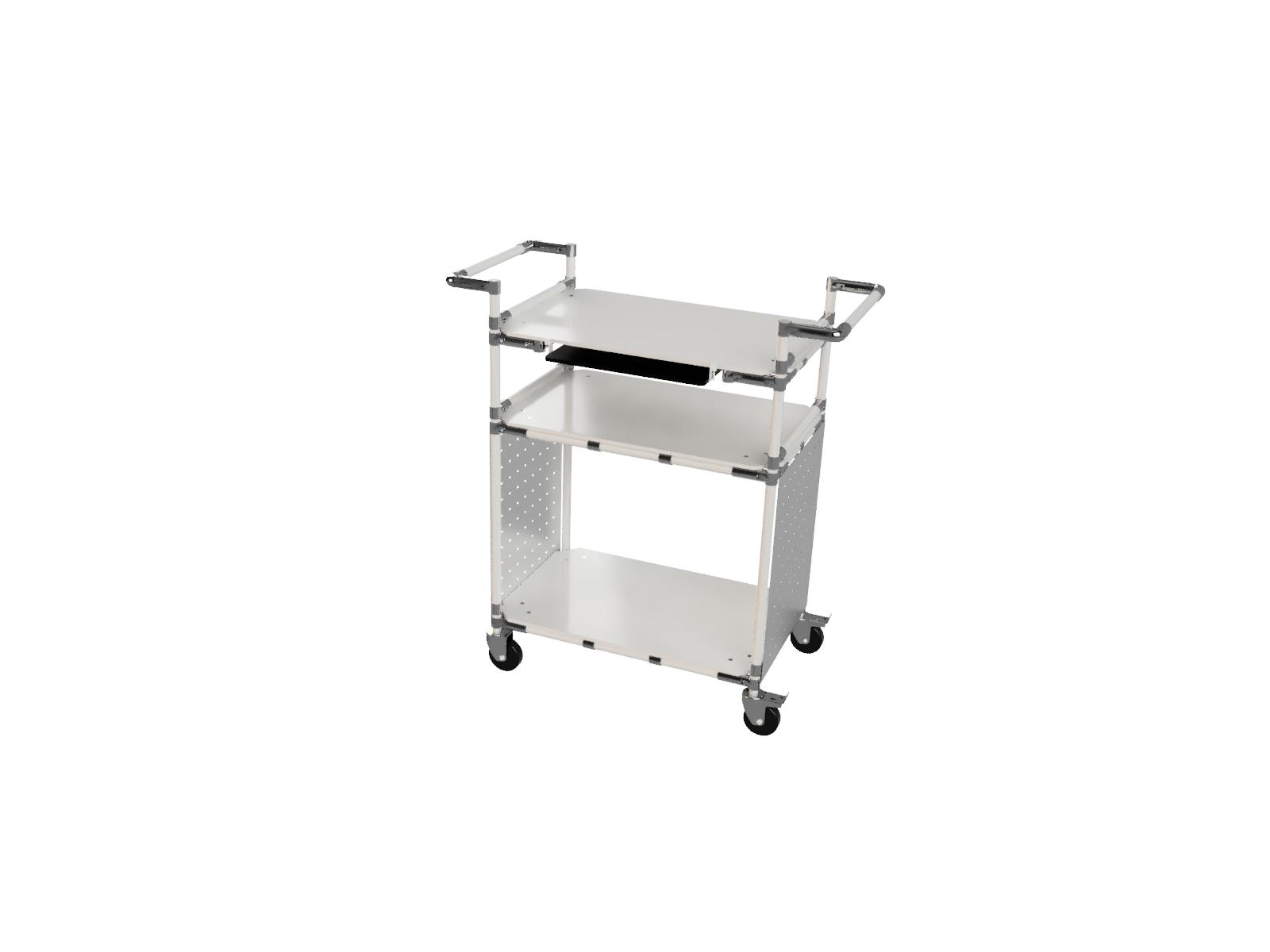
How to Reduce Material Handling Waste with the Right Industrial Trolley System
Material handling is part of almost every manufacturing, assembly, warehouse, and logistics operation. While it may seem like a routine activity, inefficient material movement can consume significant time, increase operator fatigue, create bottlenecks, and reduce overall productivity.
Many businesses focus on investing in new machinery to improve production efficiency, yet overlook how materials move between workstations. In reality, unnecessary transportation, excessive walking, repeated lifting, and poor workstation organization can all contribute to operational waste.
An industrial trolley system designed around Lean manufacturing principles helps streamline these daily tasks by ensuring materials, tools, and components are available where they are needed, when they are needed. Rather than treating trolleys as simple transport equipment, businesses can use them as part of a structured workflow that supports safer and more efficient operations.
Understanding Material Handling Waste
In Lean manufacturing, waste refers to activities that consume time or resources without adding value to the final product. One of the recognised forms of waste is unnecessary transportation, where materials are moved more often or over longer distances than required.
Examples include:
- Operators walking across the production floor to retrieve tools.
- Components being transferred multiple times before assembly.
- Finished products waiting on the floor before being moved.
- Temporary storage areas causing repeated handling.
- Workers carrying loads manually because suitable transport equipment is unavailable.
Although each activity may appear minor, these repeated movements accumulate throughout the day and reduce overall operational efficiency.
Signs Your Current Material Handling Process Needs Improvement
Many factories continue using manual handling methods simply because they have become routine. However, there are several indicators that suggest your current process could benefit from better material handling solutions.
Frequent Operator Movement
If operators regularly leave their workstations to collect tools, materials, or documents, valuable production time is lost. A well-designed mobile workstation or logistics trolley can bring essential items directly to the point of use.
Multiple Handling of the Same Materials
Products that are repeatedly loaded, unloaded, or transferred between containers increase labour requirements while also increasing the risk of product damage.
Congested Production Areas
Materials stored beside workstations or in walkways can create unnecessary obstacles and reduce workplace organisation.
Delays Between Production Stages
When materials are not delivered consistently to the next process, production teams may spend unnecessary time waiting instead of producing.
Why the Right Industrial Trolley Makes a Difference
Industrial trolleys are no longer limited to transporting boxes from one location to another. Modern trolley systems can be configured to support specific production processes, helping operators work more efficiently throughout the day.
Depending on the application, a trolley may be designed for:
- Material replenishment
- Component picking
- Tool organisation
- Mobile assembly
- Packaging operations
- Quality inspection
- Finished goods transport
Because every production environment is different, a one-size-fits-all trolley is not always the most effective solution. Customisable trolley systems allow businesses to match the equipment to their workflow instead of forcing operators to adapt to fixed layouts. 3D-Tube specialises in customisable LEAN material handling solutions, including logistics trolleys, table trolleys, mobile workstations, and storage systems that can be tailored to different operational requirements.
Selecting the Right Trolley for Different Applications
Choosing the appropriate trolley depends on how materials move through your operation.
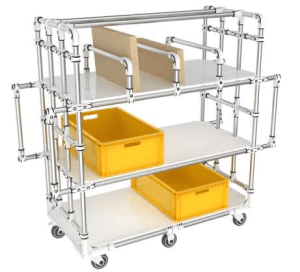
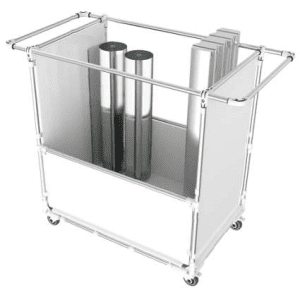
Logistics Trolleys
Logistics trolleys are suitable for transporting cartons, components, and finished goods between departments or production lines. They help reduce manual carrying while improving the consistency of material flow.
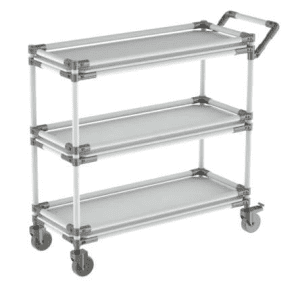
Table Trolleys
Table trolleys provide a stable work surface while allowing materials or tools to be moved easily between work areas. They are commonly used for assembly, inspection, and packing operations.
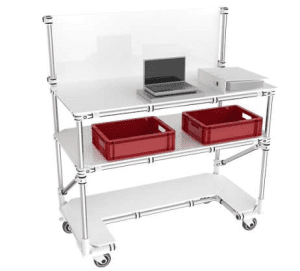
Mobile Workstations
Unlike traditional trolleys, mobile workstations combine mobility with organised storage and a dedicated work surface. They enable operators to perform value-added tasks wherever required without repeatedly returning to a fixed workstation.
Trolleys for Bulky Items
Large or irregularly shaped products often require specialised support. Purpose-built trolleys for bulky item help improve handling while reducing manual lifting and improving workplace safety.
Integrating Trolleys into a Lean Workflow
A trolley delivers the greatest value when it forms part of a wider workplace organisation strategy.
For example, a production line may use:
- Flow racks to maintain first-in, first-out inventory.
- Mobile workstations for assembly operations.
- Logistics trolleys to replenish components.
- Shelf trolleys for order picking.
- Stainless steel worktables in hygiene-sensitive environments.
Instead of functioning as individual products, these solutions work together to create a smoother production flow with fewer interruptions.
3D-Tube offers a range of modular workplace and warehouse material handling solutions that can be combined to support different manufacturing and warehouse layouts.
The Benefits of Customisable Industrial Trolley Systems
Production requirements rarely remain static. New products, layout changes, and process improvements often require equipment to adapt.
Customisable trolley systems offer greater flexibility by allowing businesses to configure:
- Shelf quantity and spacing
- Overall dimensions
- Load capacity
- Accessories
- Information boards
- Tool storage
- Wheel configurations
This flexibility helps extend the useful life of equipment while allowing manufacturers to optimise workflows without replacing entire systems.
Building a More Efficient Workplace
Reducing material handling waste is not about moving materials faster. It is about eliminating unnecessary movement altogether.
When operators spend less time searching for tools, transporting components, or navigating congested workspaces, they can focus more on productive activities.
By combining mobile workstations, logistics trolleys, table trolleys, flow racks, and organised storage solutions, businesses can create a workplace that supports smoother production flow, better space utilisation, and more consistent operations.
As manufacturing environments continue to evolve, investing in adaptable LEAN material handling systems provides a practical way to improve workplace organisation while supporting future operational changes.
Conclusion
An effective industrial trolley system does more than transport materials. It becomes an important part of a Lean manufacturing strategy by supporting efficient workflows, reducing unnecessary movement, and improving workplace organisation.
Whether your operation requires logistics trolleys, table trolleys, mobile workstations, or integrated material handling solutions, selecting equipment that matches your production process can contribute to more organised and efficient daily operations.
For businesses looking to optimise workplace efficiency, customisable workplace and warehouse material handling solutions offer the flexibility to support changing operational requirements while helping teams work more effectively.
Frequently Asked Questions (FAQs)
How do I know if my factory needs more than one type of industrial trolley?
If different departments perform different tasks, a single trolley design is rarely the best solution. For example, logistics trolleys are better suited for transporting materials between work areas, while table trolleys provide a stable work surface for assembly or inspection. Matching the trolley to the task improves workflow efficiency.
Is a custom industrial trolley worth the investment compared to a standard trolley?
A standard trolley may work for general transport, but customisable trolleys can be configured with shelves, tool holders, information boards, or specific dimensions that suit your production process. This often reduces unnecessary handling and improves operator productivity over time.
Can industrial trolleys be integrated with existing workstations and flow racks?
Yes. Many manufacturers use industrial trolleys together with mobile workstations, flow racks, and storage systems to create a smoother material flow. Integrating these solutions helps ensure materials are available where they are needed while reducing unnecessary movement across the workplace.
Which industries benefit most from industrial trolley systems?
Industrial trolley systems are commonly used in manufacturing, assembly, warehousing, logistics, electronics, automotive, and packaging operations. Any workplace that frequently moves materials, tools, or components can benefit from selecting trolley systems designed for its specific workflow.
What should I consider before choosing an industrial trolley supplier in Malaysia?
Look beyond load capacity and dimensions. Consider whether the supplier offers customisation, modular designs, product quality, after-sales support, and solutions that can adapt as your production requirements change. Choosing a supplier that understands LEAN material handling can provide greater long-term value.