
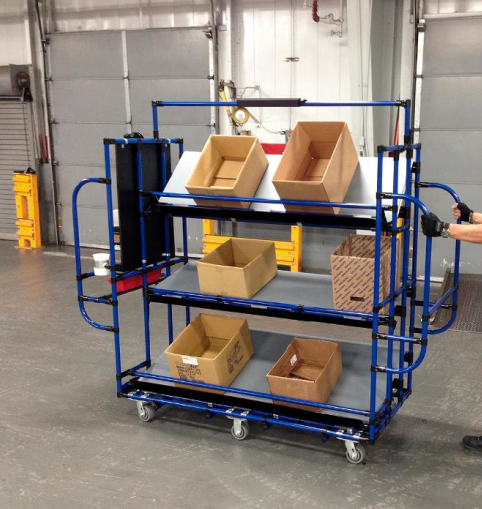
Customizable Trolley Solutions for Efficient Material Handling in Malaysia
The Role of Customizable Trolleys in Modern Warehouse and Industrial Operations
Efficient material handling plays a critical role in modern manufacturing, logistics and warehouse operations. Whether transporting components between workstations or moving inventory across large storage facilities, the right trolley system can significantly improve workflow efficiency and workplace safety.
Customizable trolley systems are increasingly popular because they allow businesses to adapt equipment to their specific operational needs. Instead of relying on generic carts, companies can configure trolley structures, shelves and accessories to support different processes such as assembly lines, logistics handling or warehouse storage.
In Malaysia’s growing industrial sector, solutions such as warehouse trolley Malaysia and shelf trolleys are widely used to streamline internal logistics. These systems reduce manual handling, improve organization and help teams move materials quickly and safely across facilities.
This article explores what defines a customizable trolley, the different types available and how businesses can benefit from adopting the right logistic trolley solutions.
What Is a Customizable Trolley and How Does It Improve Material Handling
A customizable trolley is a modular material handling cart designed to adapt to different operational requirements. Unlike fixed industrial carts, customizable trolleys allow modifications in structure, shelving configuration and accessories to suit specific workflows.
Modern trolley systems are often built using modular pipe structures and durable surfaces such as HDPE worktops combined with steel frames. This design approach allows businesses to adjust the trolley layout according to load requirements, storage needs and workspace constraints.
Typical features of customizable trolley systems include:
- Adjustable shelves or tier levels
- High load capacity frames
- Smooth rolling castor wheels for mobility
- Durable work surfaces for industrial environments
- Modular components for easy configuration
These trolleys are commonly used in manufacturing facilities, warehouses, logistics centers, assembly lines and distribution hubs.
In particular, companies implementing lean manufacturing principles rely heavily on modular trolleys because they support flexible production layouts and continuous improvement processes.
Types of Customizable Trolleys Used in Malaysia
Different industries require different trolley designs depending on how materials are transported and organized. Below are five practical trolley categories commonly used in factories and warehouses.
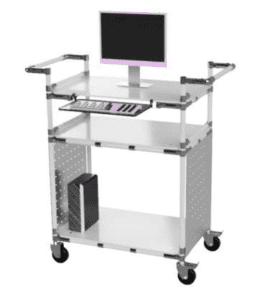
Computer Cart 3 Tier with Sliding Shelf
Logistics Trolleys
A computer cart with a three-tier structure provides a mobile cart Malaysia solution that allows operators to access digital systems while working on the production floor.
This type of trolley is often used for:
- Production monitoring systems
- Inventory tracking terminals
- Quality control stations
- Warehouse data entry points
The sliding shelf design allows easy access to keyboards or equipment while maintaining a compact footprint. In manufacturing environments where real time data tracking is essential, these mobile carts allow staff to bring digital tools directly to the workspace instead of returning to a fixed station.
As production environments become more data driven, mobile workstation trolleys help improve workflow efficiency and reduce unnecessary movement.
Logistics trolleys are designed for frequent transportation of goods across warehouses and distribution centers. These are among the most commonly used warehouse trolley Malaysia solutions.
A typical logistic trolley includes:
- Multi-level shelves for organized storage
- Durable steel tube structure
- High load capacity surfaces
- Lockable swivel castor wheels for stability
These trolleys allow workers to transport multiple items simultaneously, reducing the number of trips needed between locations. In busy warehouses, this significantly improves material flow and operational efficiency.
Logistics trolleys can support loads of up to several hundred kilograms depending on the configuration, making them ideal for moving tools, components and packaged goods.
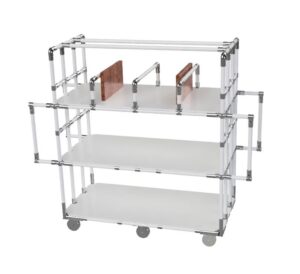
Table Trolley
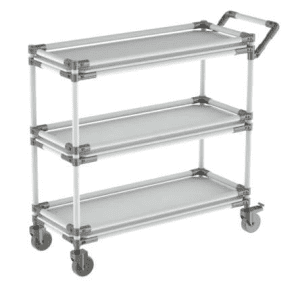
Trolleys For Bulky Item
Trolleys with Information Board
A table trolley Malaysia solution combines the functionality of a workstation with the mobility of a cart. It essentially functions as a portable worktable that can move between production areas.
This type of trolley is useful for:
- Assembly operations
- Packaging stations
- Mobile inspection tables
- Temporary workstations
Table trolleys provide a stable working surface while allowing operators to reposition the workstation as needed. In lean manufacturing environments where layouts change frequently, mobile workstations help maintain productivity without requiring permanent installations.
Many designs support multiple shelves so operators can keep tools and materials organized during tasks.
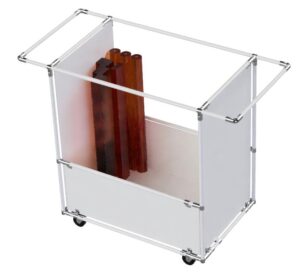
Some industrial operations require moving large or irregular items that cannot easily fit on standard carts. This is where shelf trolleys Malaysia designed for bulky items become essential.
These trolleys feature:
- Strong frames designed for heavy loads
- Larger shelf surfaces
- Stable wheel configurations for safe transport
Bulky item trolleys are often used in manufacturing plants, warehouses and equipment storage areas where oversized products must be moved safely.
Transporting heavy items manually can increase the risk of workplace injuries such as back strain or muscle fatigue. Material handling carts help reduce these risks by minimizing manual lifting and improving load stability during movement.
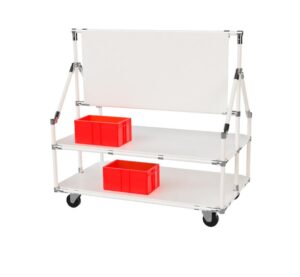
Some trolley systems integrate communication tools such as whiteboards or information panels. These are known as trolleys with information boards.
They are particularly useful for:
- Lean manufacturing visual management
- Kanban systems
- Production status updates
- Work instructions display
By combining material transport with visual communication, these trolleys support better coordination across teams. Workers can easily see instructions, workflow status or task priorities while moving materials between stations.
This makes them valuable tools in factories practicing lean production or continuous improvement processes.
Why Businesses in Malaysia Choose 3D Tube Customizable Trolley Solutions
Choosing the right trolley supplier is just as important as selecting the trolley design. Businesses benefit most from solutions that can adapt to their specific workflows and operational challenges.
-
Modular System Design for Flexible Industrial Applications
The modular 3D tube system allows companies to configure trolleys based on operational needs. Shelves, frames and accessories can be adjusted without replacing the entire unit.
-
Improved Productivity and Material Flow
By organizing tools and materials within easy reach, trolleys help reduce wasted movement and streamline production workflows.
-
Durable Construction for Industrial Environments
Heavy duty materials such as coated steel tubing and HDPE work surfaces provide durability for demanding industrial environments.
-
Supports Lean Manufacturing and Continuous Improvement
These trolley systems align well with lean manufacturing practices by supporting mobility, flexibility and continuous workflow optimization.
-
Scalable Solutions for Growing Operations
Flexible ordering options make it easier for businesses to start with small deployments and expand as operations grow.
Choosing the Right Warehouse Trolley System for Your Operations
Customizable trolley systems have become essential equipment for modern manufacturing and logistics environments. From table trolley Malaysia workstations to warehouse trolley Malaysia logistics carts and shelf trolleys Malaysia for heavy loads, these solutions help organizations improve material flow, workplace safety and operational efficiency.
With modular designs and flexible configurations, businesses can adapt trolley systems to suit different workflows, production lines or storage environments.
As Malaysian industries continue to adopt lean manufacturing and smarter logistics processes, investing in the right logistic trolley solution can significantly improve productivity and workplace organization.
Companies that implement customizable trolley systems today position themselves for more efficient and scalable operations in the future.
Frequently Asked Questions (FAQs)
What type of trolley is best for warehouse material handling in Malaysia?
The best warehouse trolley depends on load weight, movement frequency and storage configuration. Multi-tier logistic trolleys are commonly used because they allow organized transport of multiple items while reducing manual handling. This improves operational efficiency and helps maintain safer workplace material flow.
How can a table trolley improve productivity in manufacturing environments?
A table trolley improves productivity by providing a mobile workstation that moves tools, parts and equipment directly to the operator. This reduces unnecessary walking, supports lean production flow and allows workstations to be repositioned based on changing production layouts or operational needs.
Why are modular shelf trolleys useful for modern warehouse operations?
Modular shelf trolleys allow businesses to adjust shelf height, layout and accessories based on different operational tasks. This flexibility helps warehouses organize materials more efficiently while supporting scalable storage systems that can adapt as inventory levels and processes change.
When should businesses use heavy duty trolleys for bulky industrial items?
Heavy duty trolleys should be used when transporting large, heavy or irregularly shaped items that are difficult to move manually. These trolleys provide stronger frames, stable wheels and larger surfaces to ensure safe movement while reducing the risk of worker injuries caused by lifting heavy loads.
How do visual management trolleys support lean manufacturing systems?
Trolleys with information boards support lean manufacturing by displaying work instructions, production status or Kanban signals directly at the point of operation. This improves communication between teams, reduces confusion during tasks and helps workers follow standardized processes more efficiently.